
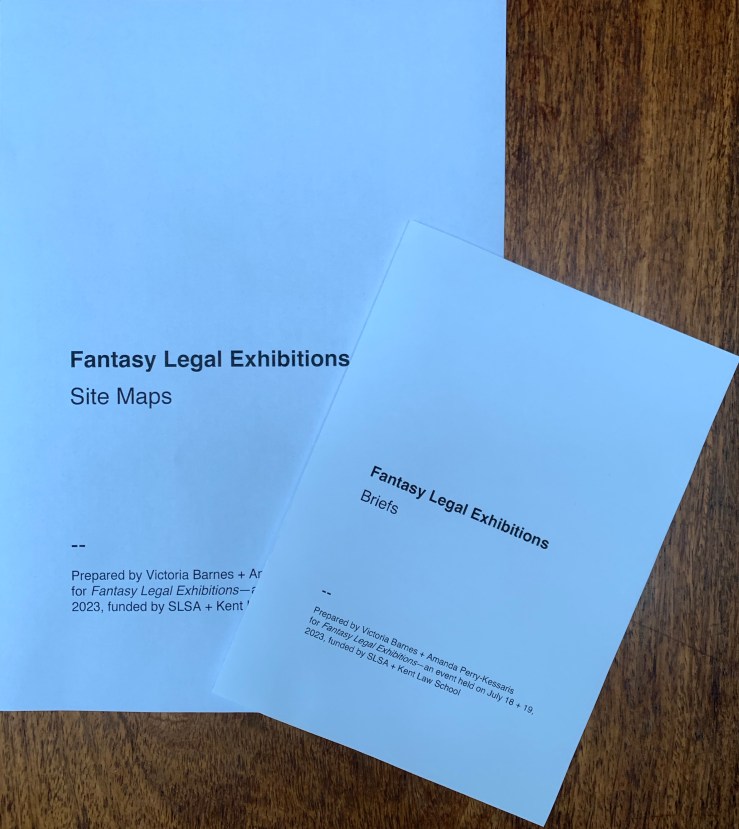
This post introduces the Fantasy Legal Exhibitions Project led by Amanda Perry-Kessaris and Victoria Barnes.
The aim of the project is to explore exhibition as an actual-potential legal research practice.
We use the word ‘fantasy’ for two reasons. First, we want to signal that we hoped to push participants to think beyond what might initially appear possible—to work, at least provisionally, beyond everyday constraints of resources and our imagination. Second, we want to draw attention to the potential of exhibitions to conjure things—timelines, conjunctions, intersections, experiences—that are not accessible in the wider world, and that might prove generative for legal research(ers).
Workshop
The project originated in a two-day workshop held in 2023 funded by a Socio-Legal Studies Association Seminar Grant and by the Kent Law School Participatory Research Fund.
We planned the workshop using techniques and knowledge from experience design. For example, we paid close attention to the emotional, intellectual and behavioural dimensions of the participant experience before, during and after the core event. We used ‘briefs’—a series of carefully specified tasks—not only for the instrumental purpose of encouraging participants to make progress towards their fantasy exhibition, but also a device to generate a coherent narrative for the event.
- For a full account of the workshop rationale, process, and participant feedback see Amanda Perry-Kessaris and Victoria Barnes (2025) ‘Fantasy Legal Exhibitions’ 76(2) Northern Ireland Legal Quarterly 247-276.
Our workshop participant-collaborators (hereinafter ‘participants’) were:
- Almas Shaikh
- Clare Williams
- Erika Rackley
- Favour Borokini
- Fred Motson
- Helen Rutherford
- Lilian Moncrieff
- Renske Vos
- Sharon Thompson
Before
The first brief was embedded in an atypical Call for Participation. Applicants were invited to respond to three prompts which were designed to surface something of their experiences and ambitions around exhibition.
Once selected, our participant collaborators were asked to complete a set of pre-event activities—such as a virtual tour of Rule of Law at the British Museum, and reading literature exploring themes from curation, archiving, visual culture and design.
During
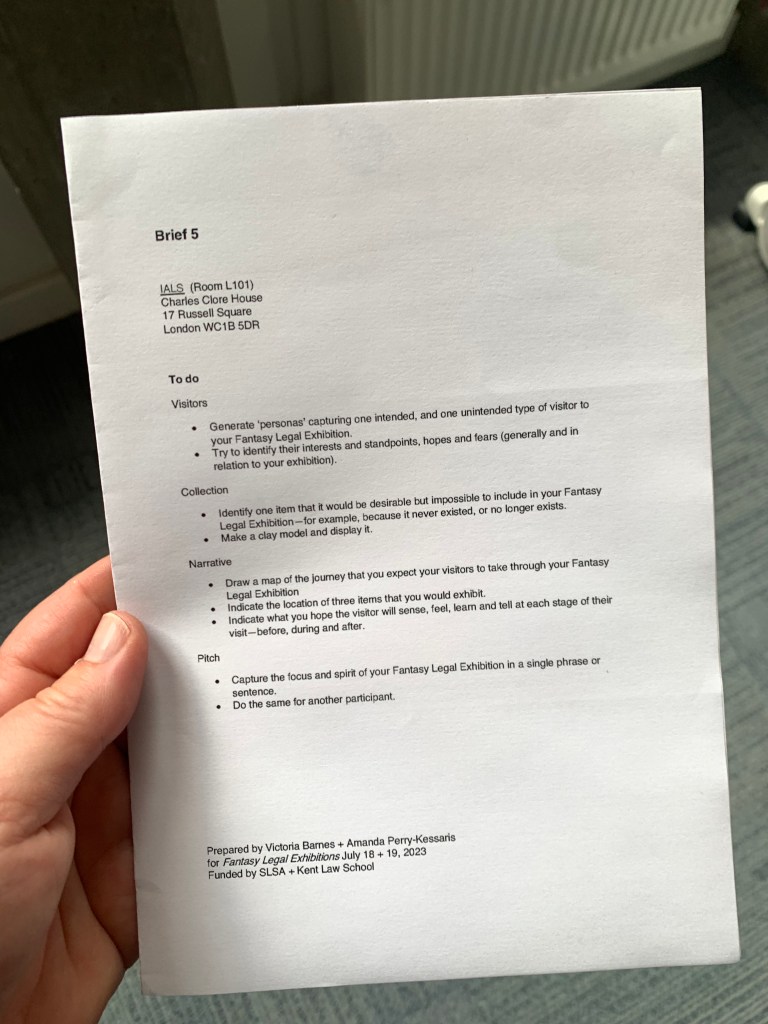
The core Workshop was held across five central London locations on 18 and 19 July of 2023. In each location, participants were invited to engage with artefacts, spaces, concepts, curatorial and archival practices, and/or experts, through the device of one or more Briefs [download .pdf of Briefs].
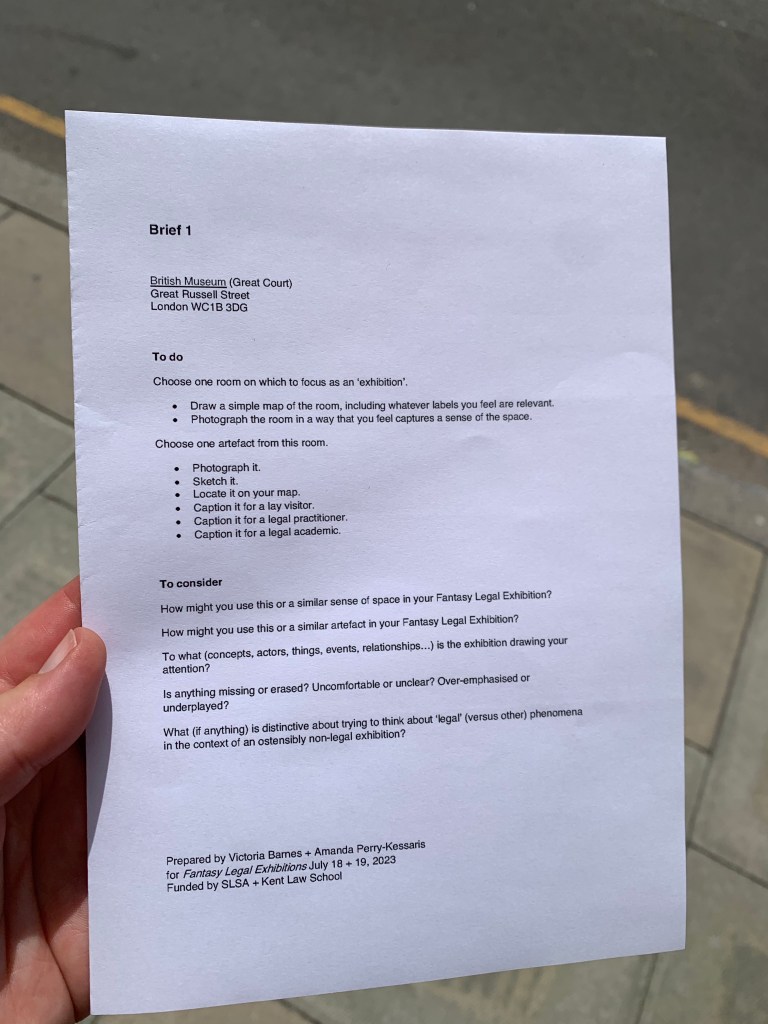

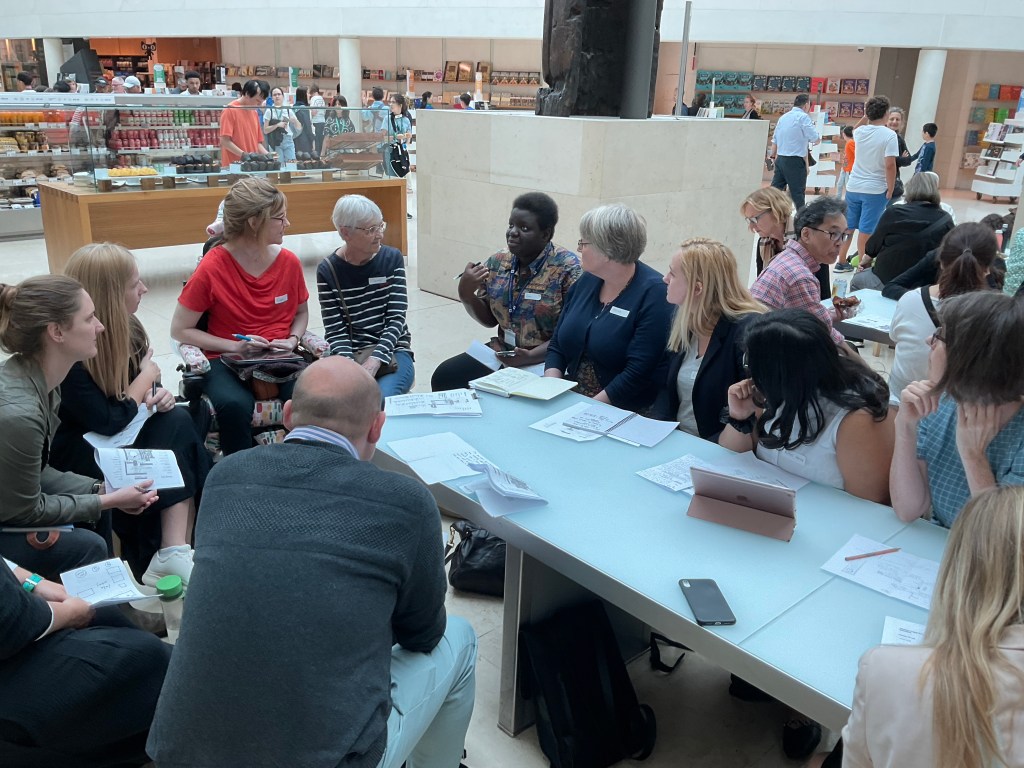
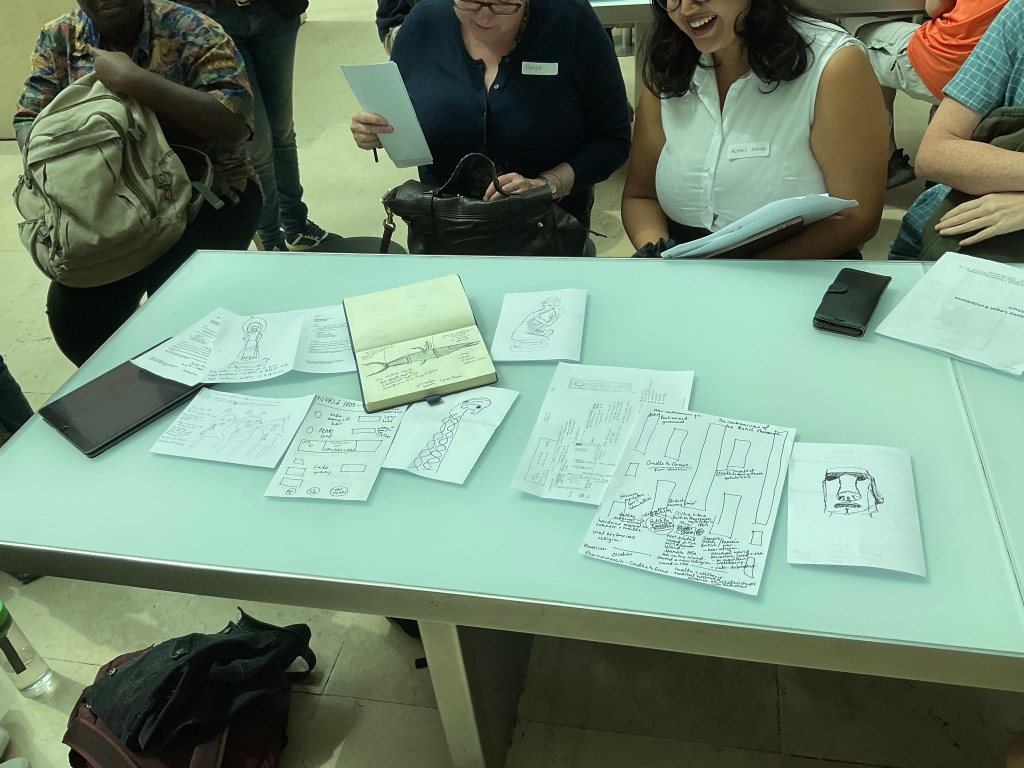
For example, at the crowded British Museum, our participants were asked to choose one room on which to focus as an ‘exhibition’, and to explore it spatially using mapping and photography; and to consider to what the exhibition was drawing attention, what might be missing or erased, uncomfortable or unclear.
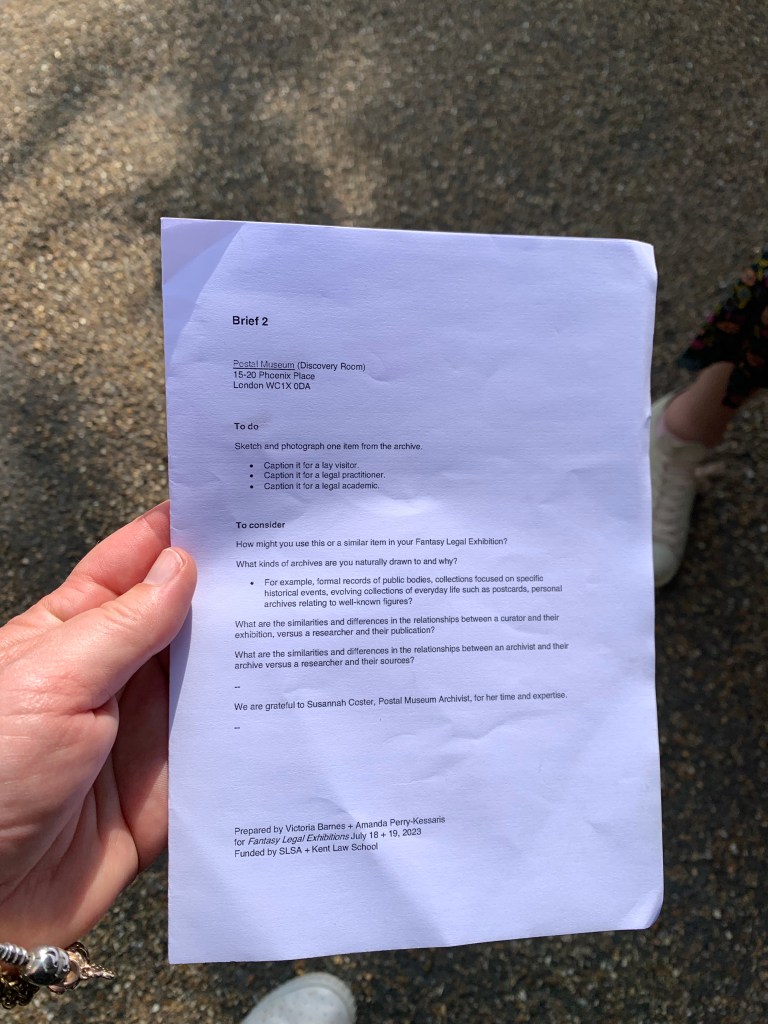
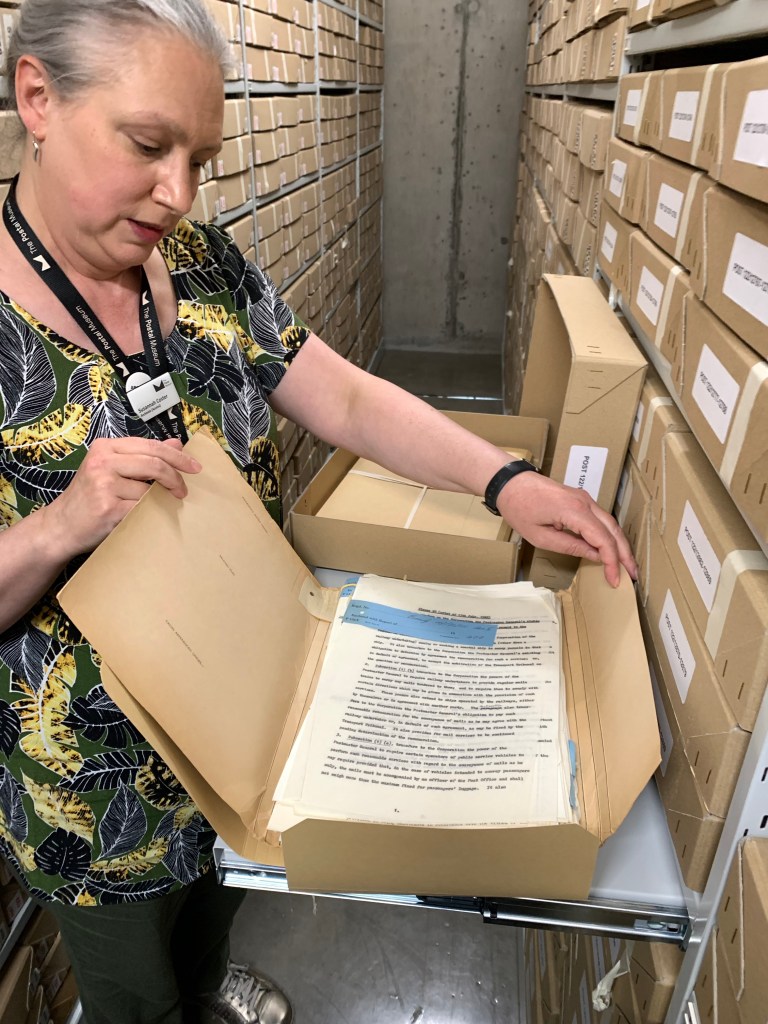
In the quiet of the Postal Museum, they were invited to handle items from the archive, and asked, among other things, to caption one item for a lay visitor, for a legal practitioner, and for a legal academic.

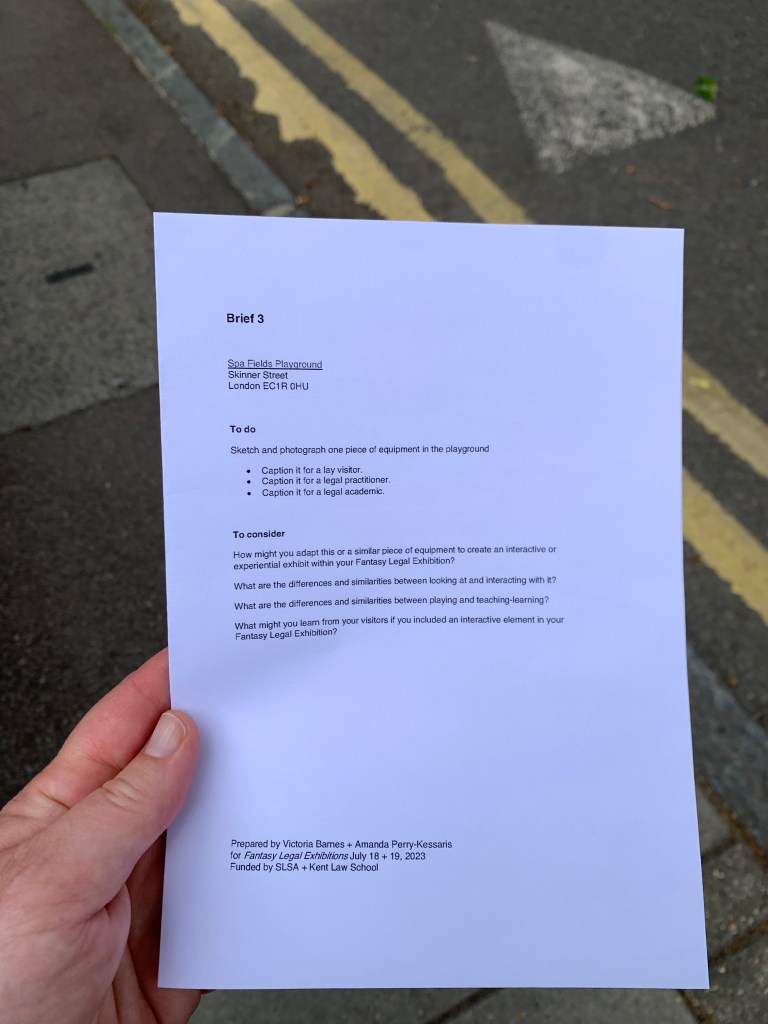
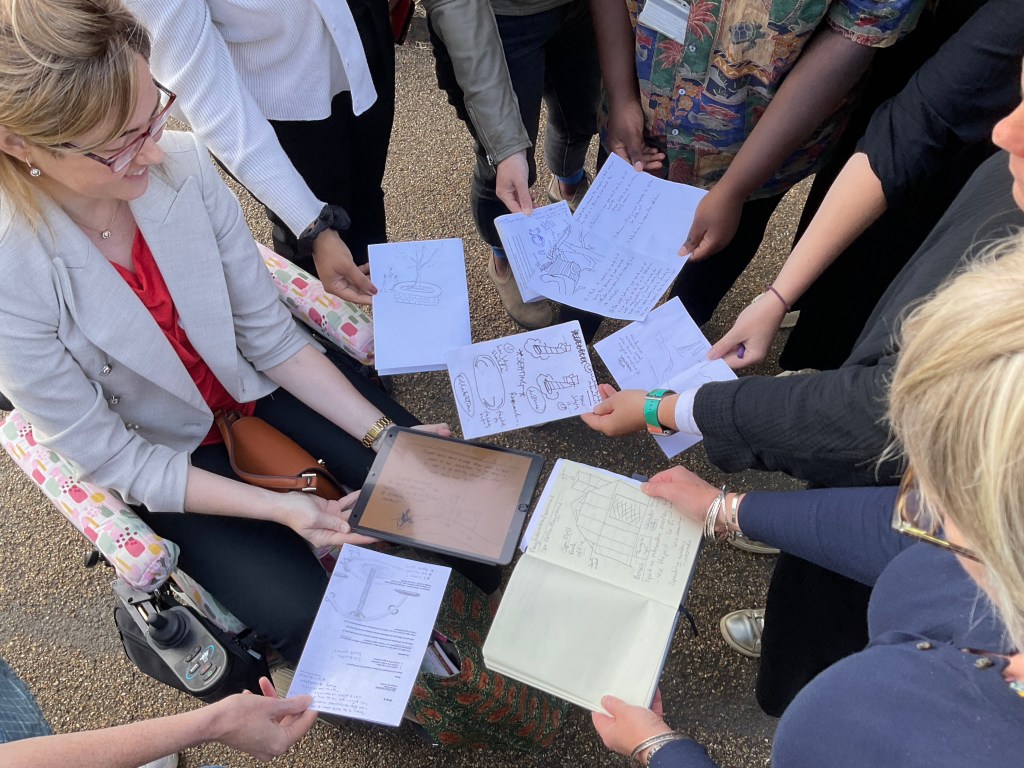
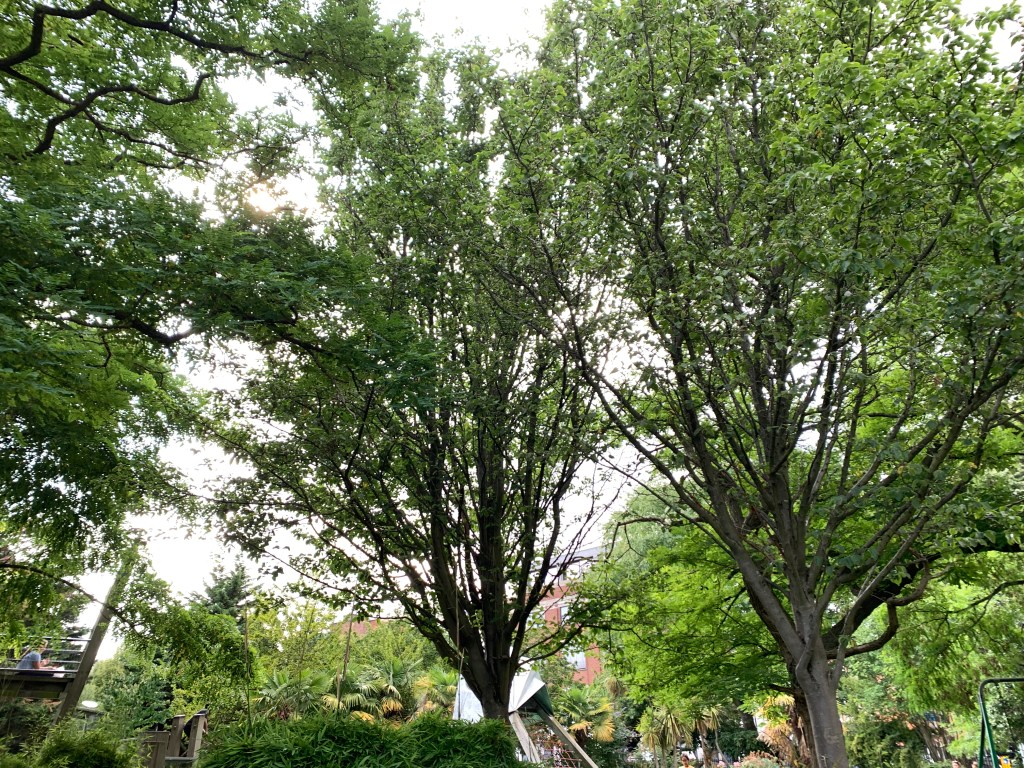
Then, outside among the shrubs and trees of Spa Fields playground, participants were asked to focus on one piece of play equipment and to consider how they might adapt it to create an interactive or experiential component in their Fantasy Legal Exhibition.
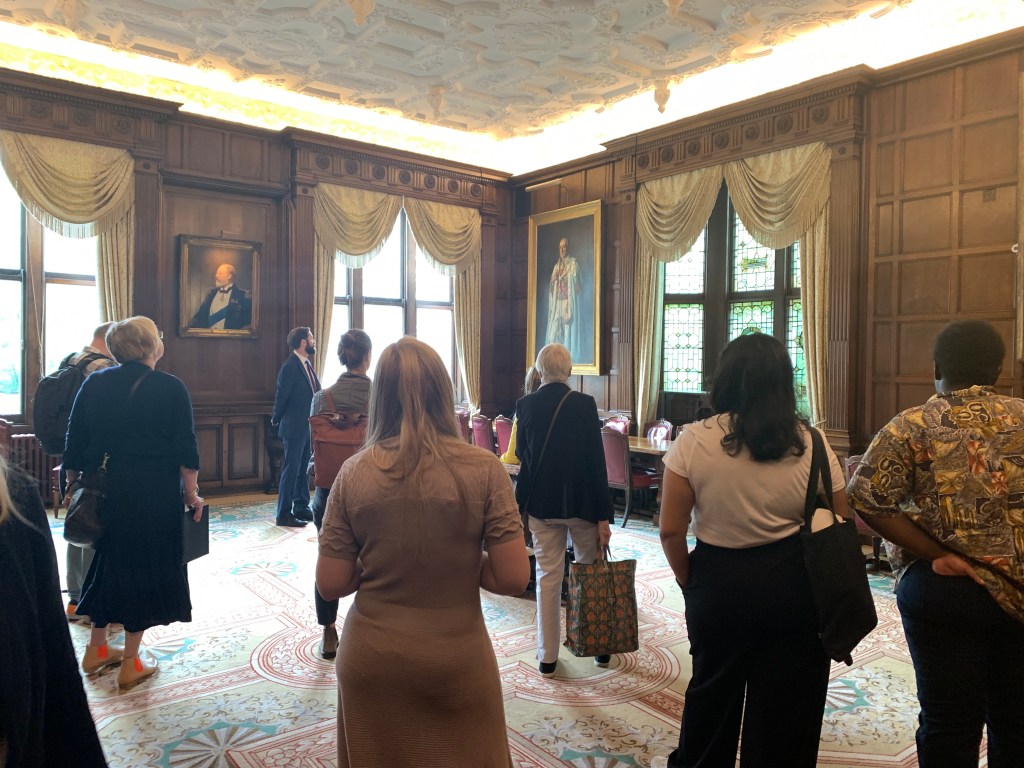
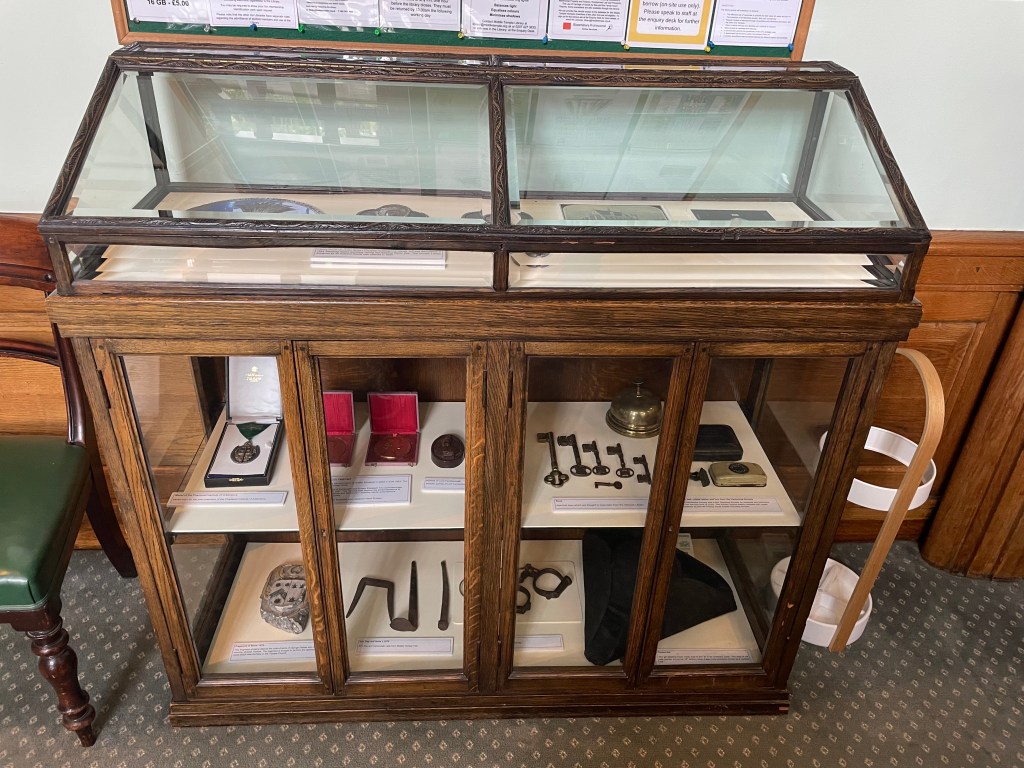
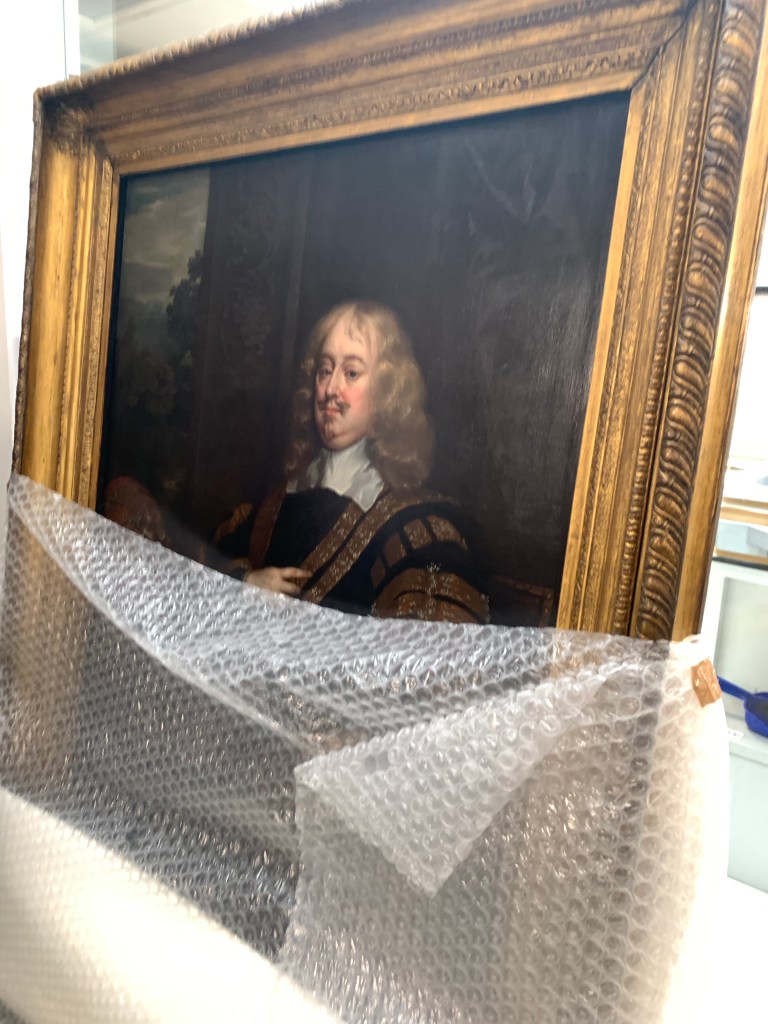
At Middle Temple, participants were invited to consider the role of conservation and exhibition, especially when a collection forms part of the everyday fabric of an organisation.
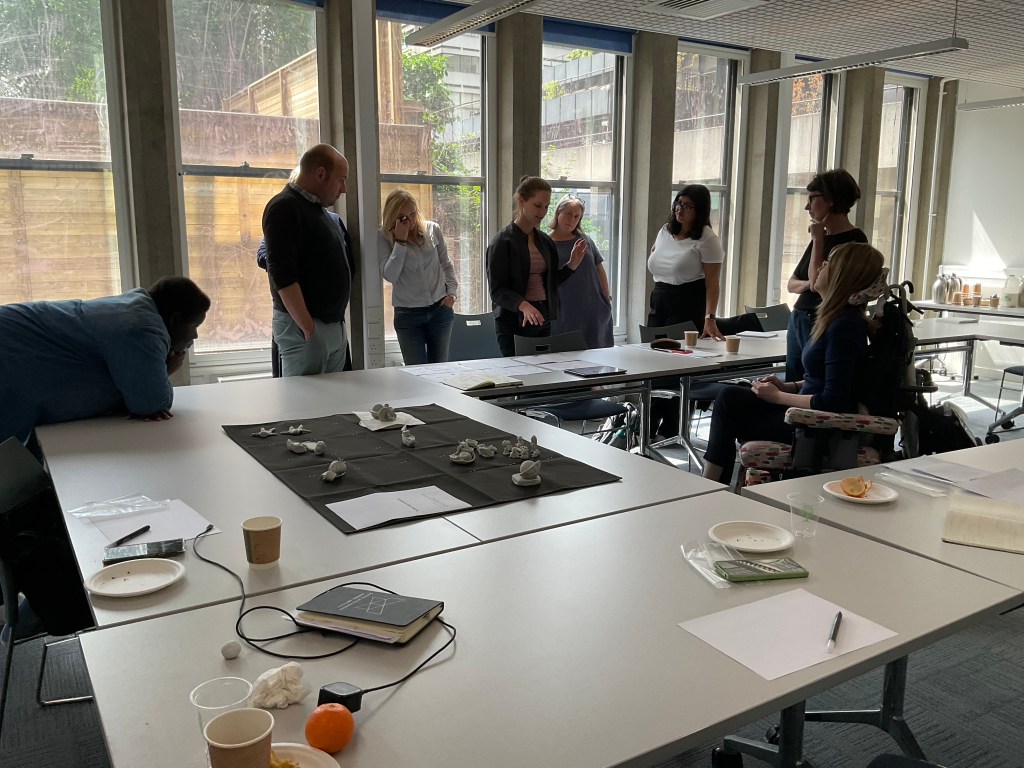
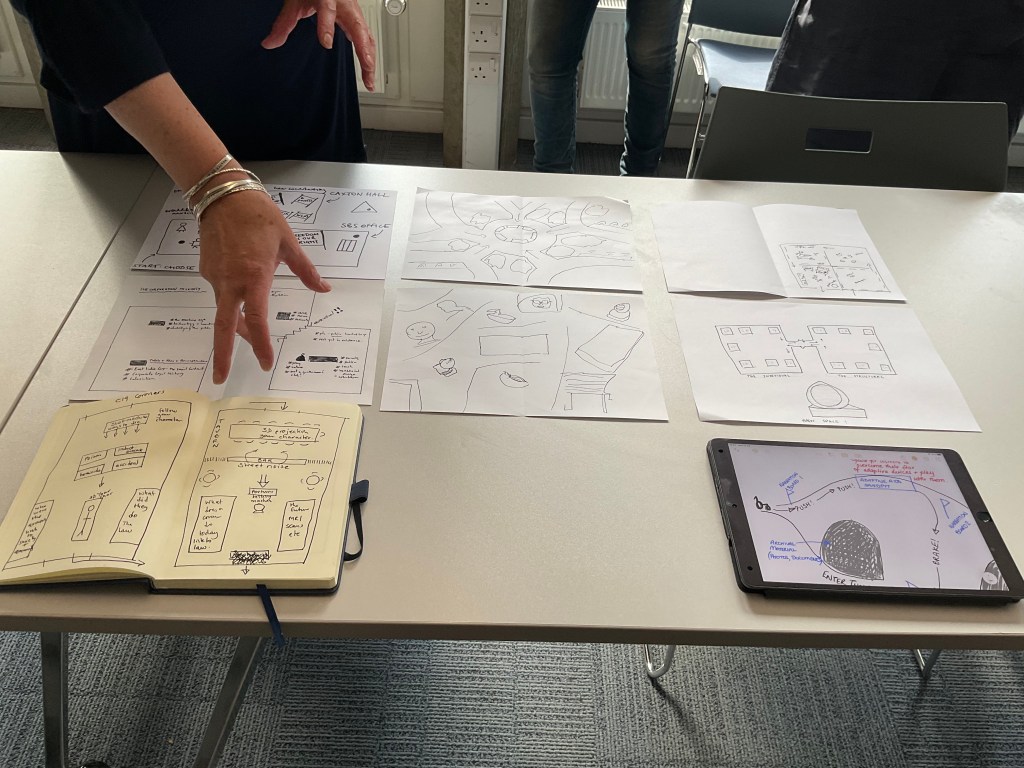
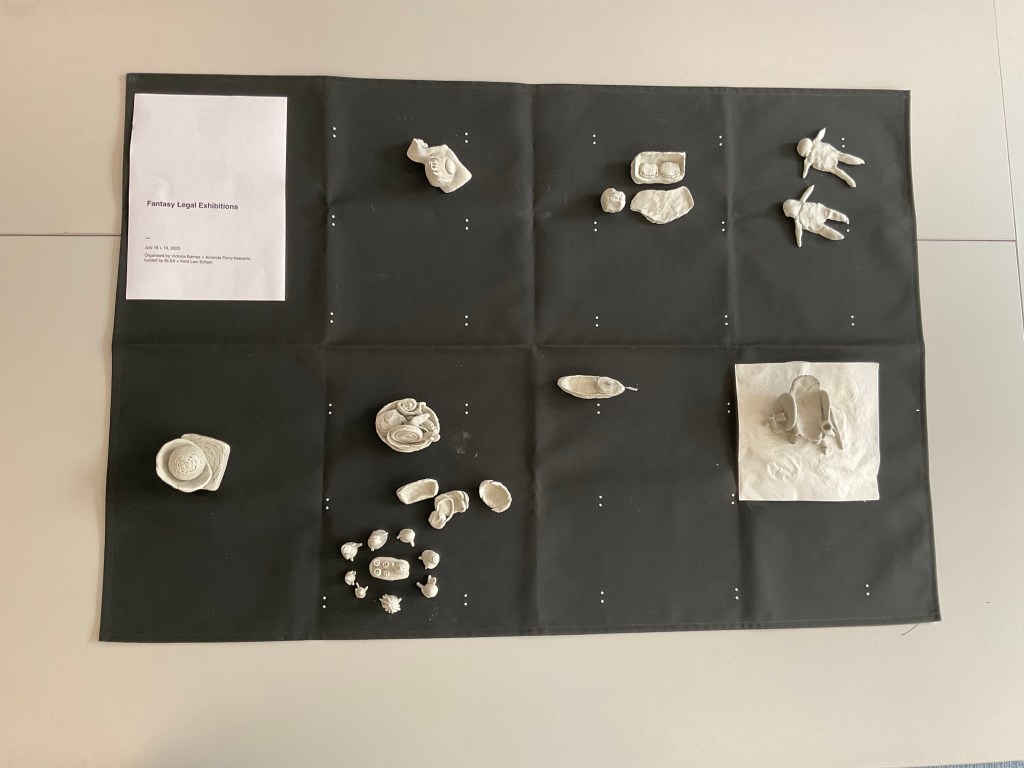
Finally, in the calm of the Institute of Advanced Legal Studies (IALS), our participants identified an item that it would be desirable, but impossible to include in their Fantasy Legal Exhibition—because, for example, it never existed, or no longer exists; then made a clay model of it to exhibit alongside those of other participants. And they mapped the journey, and accompanying sensations, emotions, and insights, that they anticipate for visitors to their Fantasy Legal Exhibition.

After
Our participants completed four post-Workshop briefs.
- A statement reflecting on the Workshop experience, including insights gained, enjoyments had, and agonies sustained (see our SLSA Blog post for extracts); and
- A prototype of their Fantasy Legal Exhibition in the form of five slides with accompanying narration notes.
- Feedback on the prototype of a peer.
- Narrated video of revised prototype exhibition (see below).
Impact
Helen Rutherford completed an adapted version of Fantasy Legal Exhibition workshop with colleagues in Newcastle in 2024-25.
- Participant feedback documented in her FLE Newcastle Report indicates that it impacted on participants’ approaches to teaching as well as research.
- She writes ‘I am convinced that [the FLE methodology] is an opportunity for all law departments. A tailored FLE workshop can work in any town or city, sparking creative research and refreshing jaded academics. It is especially helpful for new researchers who have been practitioners and do not have a traditional research background, if they are willing to embrace the process. It is beneficial for anyone wishing to branch out in a new direction, explore local resources, and make connections with archival and museum-based staff.’
Renske Vos and collaborators organised a Legal Sightseeing Festival in 2026, including a photo exhibition and some more fantastical elements that she prototyped during the FLE project, and the launch of Legal Sightseeing and International Law, an open-access monograph co-authored with Sophia Stolk.
Erika Rackley and Sharon Thompson are developing their feminist legal history museum, inspired by their participation in the project, for which they have published a novel methodological framework: ‘feminist legal constellations’.
Favour Borokini has been awarded funding to develop her exhibition, as well as a film.
Almas Shaikh is planning to realise her exhibition, as well as a digital space.
Amanda Perry-Kessaris is co-organising two news project focusing on objects, curation and exhibition:
- Enlivening Law through The Postal Museum (with Emily Allbon and Susannah Coster, Access Archivist at The Postal Museum) which includes FLE collaborator Fred Motson.
- Legal Futures at The Horniman Museum and Gardens (with Elen Stokes) which includes FLE collaborators Erika Rackley, Helen Rutherford, and Clare Williams.
Acknowledgements
This event would not have been possible without the generous engagement of Susannah Coster (Access Archivist at The Postal Museum) and Barnaby Bryan (Archivist at Middle Temple); and funding from the Socio-Legal Studies Association and Kent Law School.



[…] All things come to an end and so too will this piece, very shortly. A few months after the workshop, all participants were invited to create a PowerPoint presentation of their exhibition. Our presentations may be viewed at the Fantasy Legal exhibitions blog post. […]
LikeLike
[…] year CDT student Favour Borokini has written a blog post on her experience at the Fantasy Legal Exhibitions workshop last […]
LikeLike
[…] with the Edinburgh Legal Theory Group (2023), with Victoria Barnes and collaborators as part of the Fantasy Legal Exhibitions project (2023), and with Elen Stokes and collaborators as part of the Bristol Legal Futures project […]
LikeLike
[…] have, with the support of archivist Susannah Coster, used the Collections in the past, see the Fantasy Legal Exhibitions […]
LikeLike
[…] academic and social experimentation, including the Cyprus Interspecies Council (2024), the Fantasy Legal Exhibitions project (2023), and the Edinburgh Legal Theory […]
LikeLike
[…] Fantasy Legal Exhibitions (2023) […]
LikeLike