
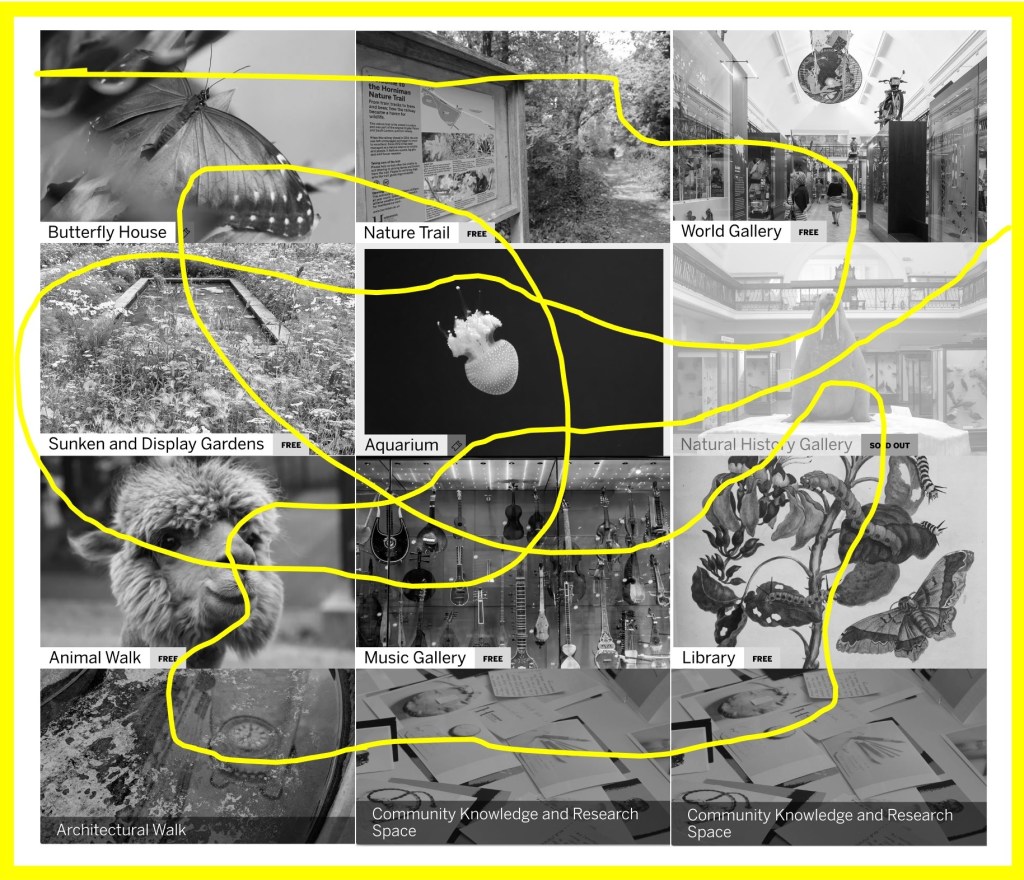
Figure 1: Searching for Legal Futures at The Horniman Museum. Image: Amanda Perry-Kessaris adapting images © The Horniman Museum and Gardens.
How might we use The Horniman Museum and Gardens to develop legal futures capacity among academic researchers; and with what benefits and risks?
We (Elen Stokes and Amanda Perry-Kessaris) are collaborating with a diverse team of legal scholars to find out:
An additional Early Career Scholar will be selected via open call in early 2026.
Why The Horniman?
The Horniman Museum and Gardens consists of a World Gallery, Music Gallery, Aquarium, Library, Animal Walk, Butterfly House, formal and informal Gardens. It is a unique site where living, non-living, and no-longer-living plants, animals, humans, building, and artefacts are explicitly entangled; and where relations with local and transnational social and professional communities are strong.
What do we mean by ‘legal futures’?
By ‘legal futures’ we mean the roles that law plays in constituting possible futures, whether by accident or by design (Stokes 2021).
By ‘legal futures capacity’ we mean our ability to work on, with, and through legal futures. To work on legal futures is to focus on legal futures as an object of inquiry. To work with and through legal futures is to activate the possibility of alternative futures, through traditional lawyerly activities such as legislation; and creative practices, such as prefiguration.
What kinds of benefits and risks do we anticipate?
We anticipate that exploring legal futures at The Horniman will generate risks and rewards around the quality of research; and of research relations—among researchers, and between researchers and those who use, or are otherwise affected by, research (Perry-Kessaris 2021).
How will we share our findings?
The main project outcome will be a Field Guide to Investigating Legal Futures at The Horniman. We envisage this as an accessible, infinitely expandable, resource. It will be designed to ‘help the novice’ (researcher, educator, student, layperson) ‘to rethink and freshly perceive formerly unremarkable objects and actions’ by prompting and facilitating a ‘change in habits of valuing, observing, and in modes of involvement and connection’ (Schlünder 2020).
Related projects
This project builds on:
- Enlivening Law through The Postal Museum (ongoing)
- Bristol Legal Futures (2024)
- Fantasy Legal Exhibitions (2023)
- Pop-Up Museum of Legal Objects (2017)
Funding and ethics statement
This project is funded by an SLSA Research Grant and governed by the SLSA Statement of Principles of Ethical Research Practice, the University of Bristol Ethics of Research Policy, the University of Kent Research Ethics Policies and Practice.
References
Amanda Perry-Kessaris (2021) Doing sociolegal research in design mode. Routledge.
Elen Stokes (2021) ‘Beyond evidence: Anticipatory regimes in law’ 43:1 Law and Policy 73-91.
 Amanda Perry-Kessaris