
The Postal Museum repository is alive. Image © Amanda Perry-Kessaris, 2025.
How might we use archives and museum collections to enliven legal education? We (Amanda Perry-Kessaris and Emily Allbon) are partnering with Susannah Coster, Access Archivist at The Postal Museum, and a team of academic Collaborators, to find out.
The Postal Museum Collections contain over 60,000 objects and thousands of records from The Royal Mail Group Plc and The Post Office Ltd. They form one of the oldest business archives in the world, with items dating back 500 years. These institutions, and their earlier iterations, have long played central roles in public and private life in the United Kingdom and beyond, including as employers, communicators, regulators, distributors, and community hubs. So the Collections offer a surprisingly diverse range of rich and engaging pathways through which to explore law at the individual, local, national, and international levels; and from multiple perspectives.
Our ambition is to help to make the law, and the Collections, engaging and accessible to a wide range of people.
This Project is an experiment. Below we set out our continuously evolving process.
Phase A: Creating Sparks
Phase A focuses on co-designing a set of expert, accessible, commentaries (‘Sparks’) linking specific items from The Postal Museum Collections to core law subjects (contract, criminal, tort, public, land, trusts, EU, and jurisprudence). The Sparks will be directed to educators, students, and members of the public working from A-Level upwards. They will be made freely available online via a dedicated Digital Hub, to be linked to Lawbore, the leading directory to resources for those studying law.
Stage 1: Search
Objective: Identify a selection of items in The Postal Museum Collections that might be suitable for further exploration as the focus for a ‘Spark’.
We have:
- Drafted an Initial Search Protocol (see Outputs), in Autumn 2025, to support our Collaborators in selecting a shortlist of items that might prove suitable for development into a Spark; and
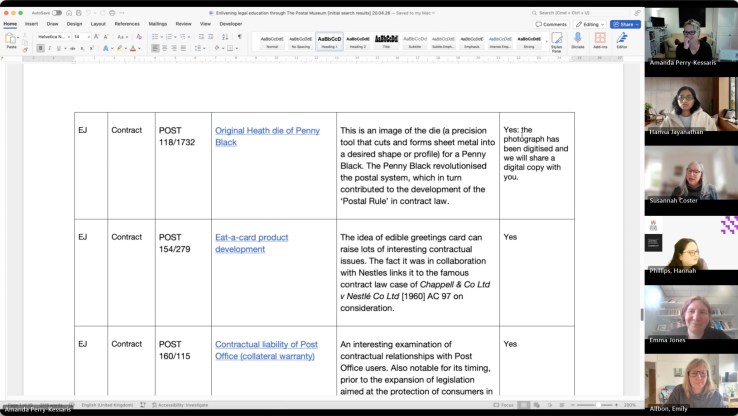
- Held two Orientation Meetings (online), in Spring 2026, at which we introduced the project, and our Collaborators introduced their shortlists.
Stage 2: Interpret
Objective: Interpret our shortlisted items in a hands-on collaborative research workshop at the Postal Museum.
We have:
- Drafted an Interpretation Protocol (see Outputs), in Spring 2026, to support our Collaborators
- Held an all-day workshop at The Postal Museum, in early Summer 2026, during which our Collaborators used the Interpretation Protocol to engage in depth with their shortlisted items, and chose the item on which they wish to focus for their Spark.
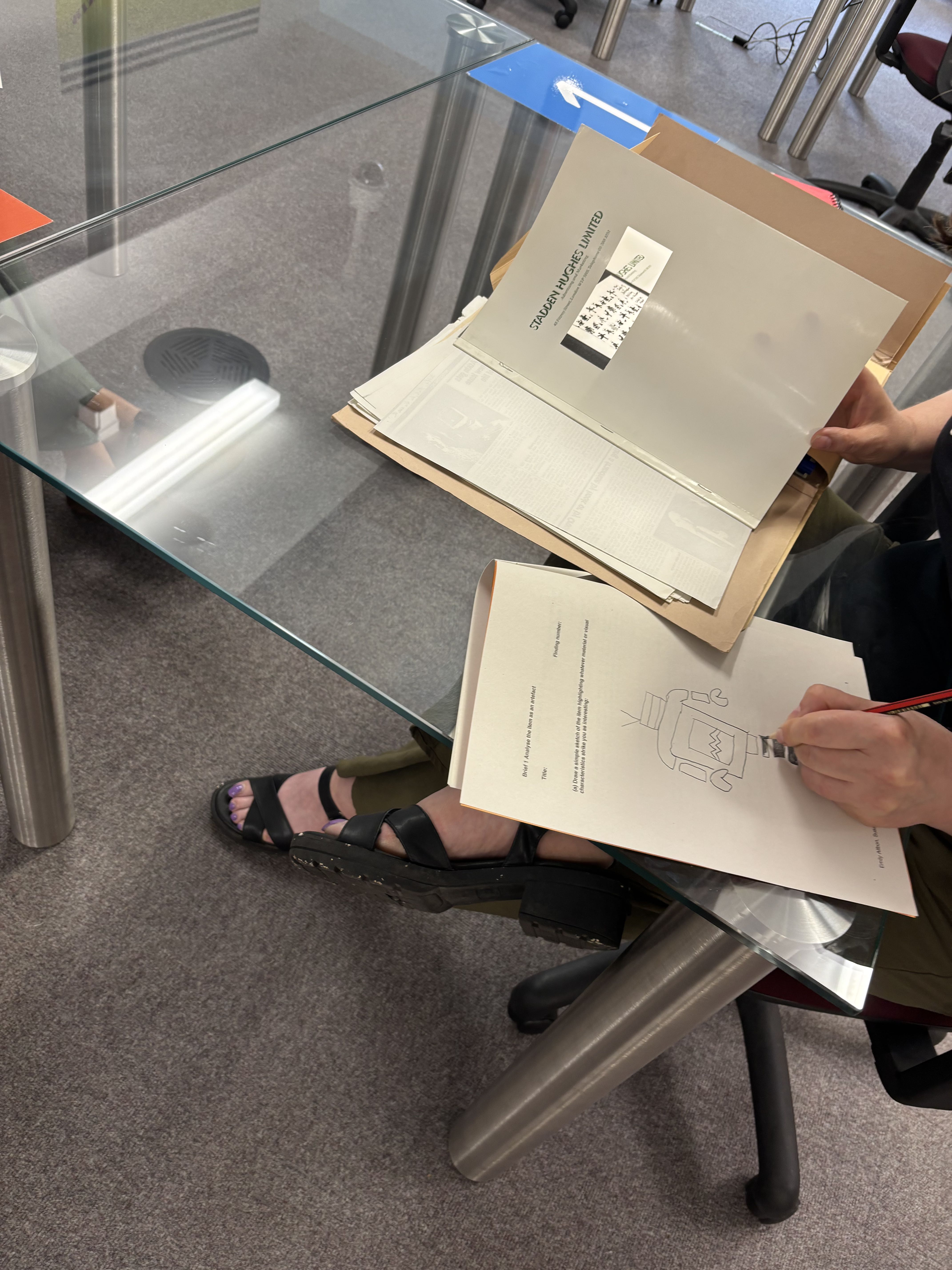
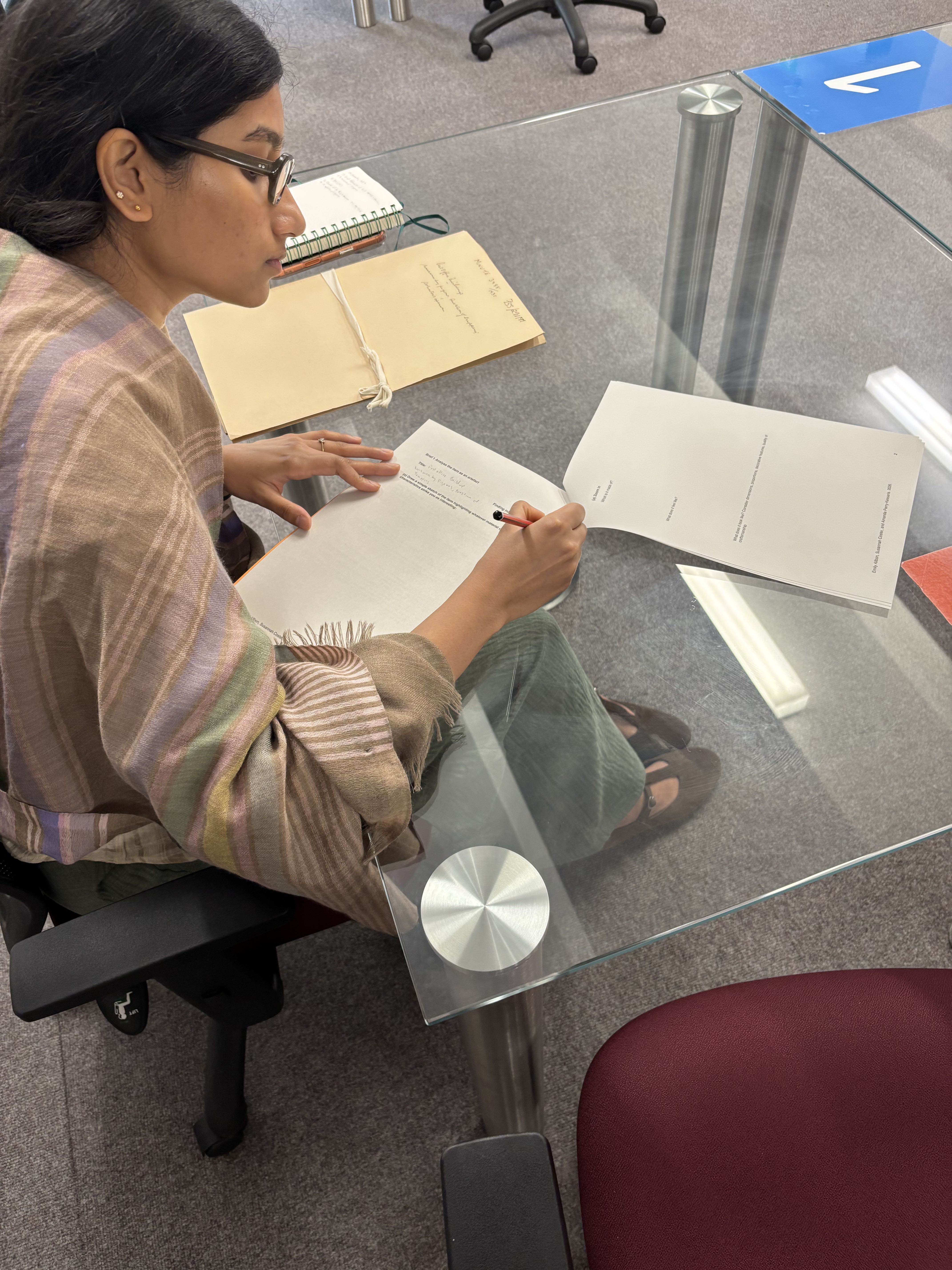
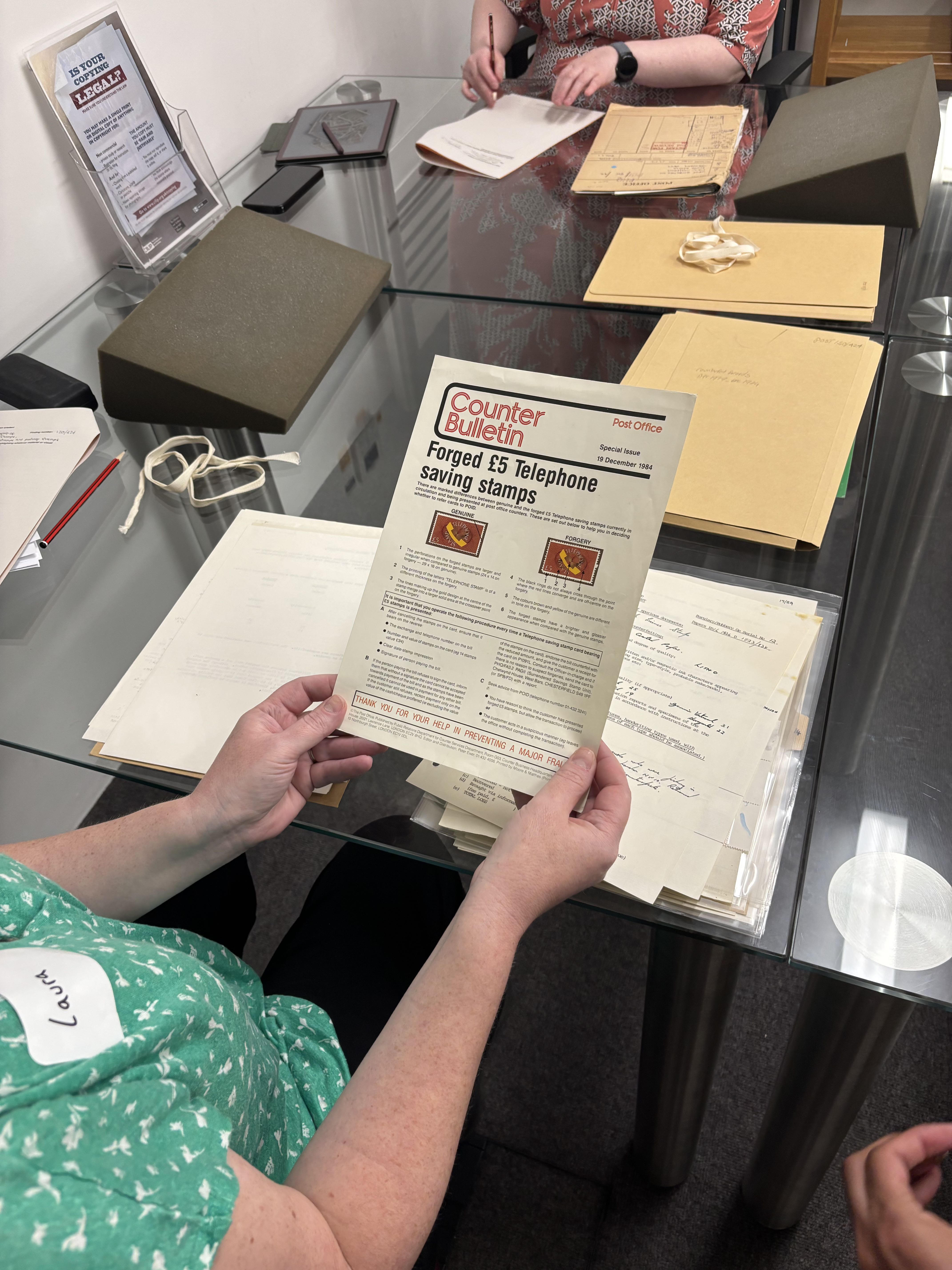
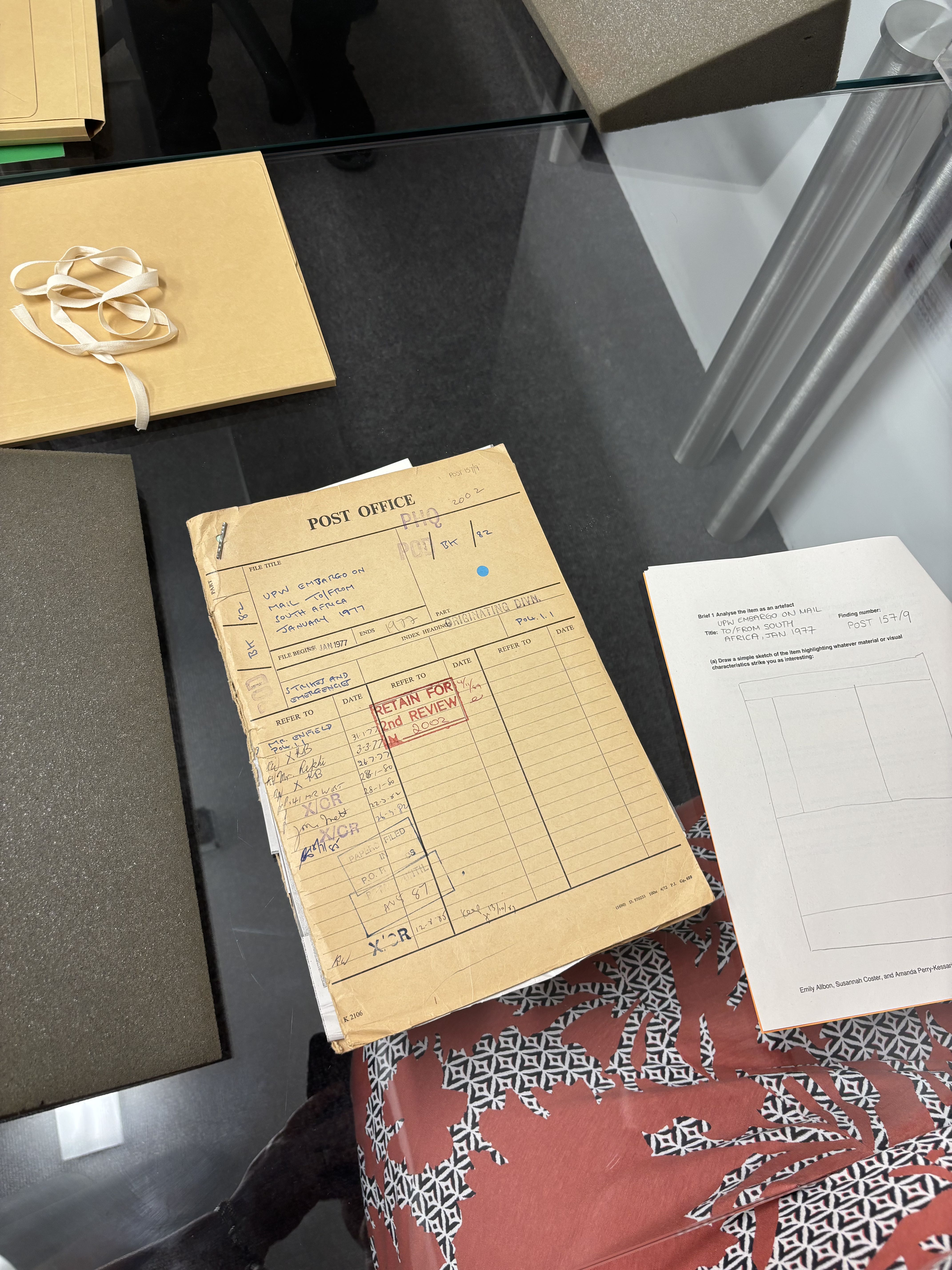
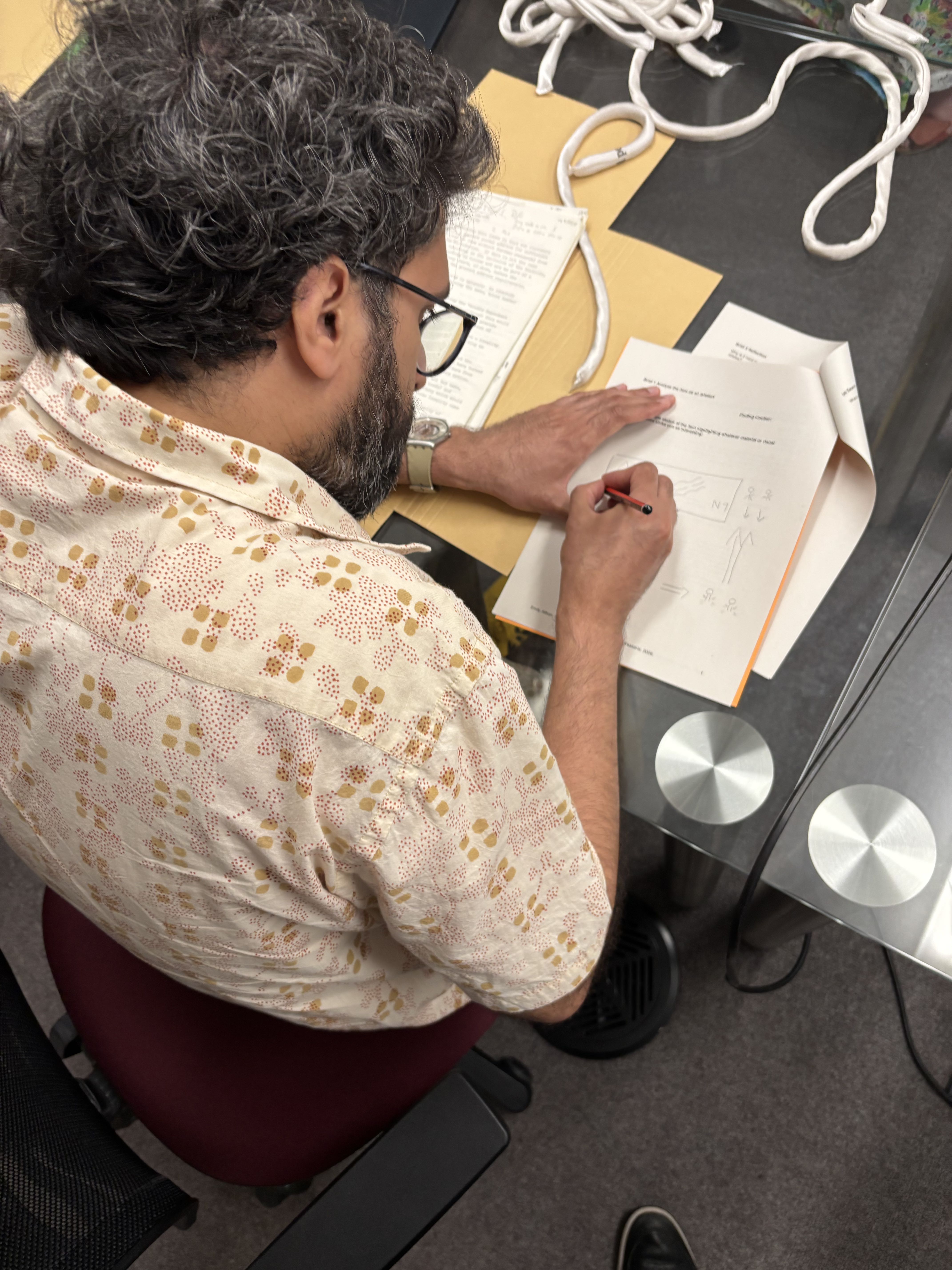
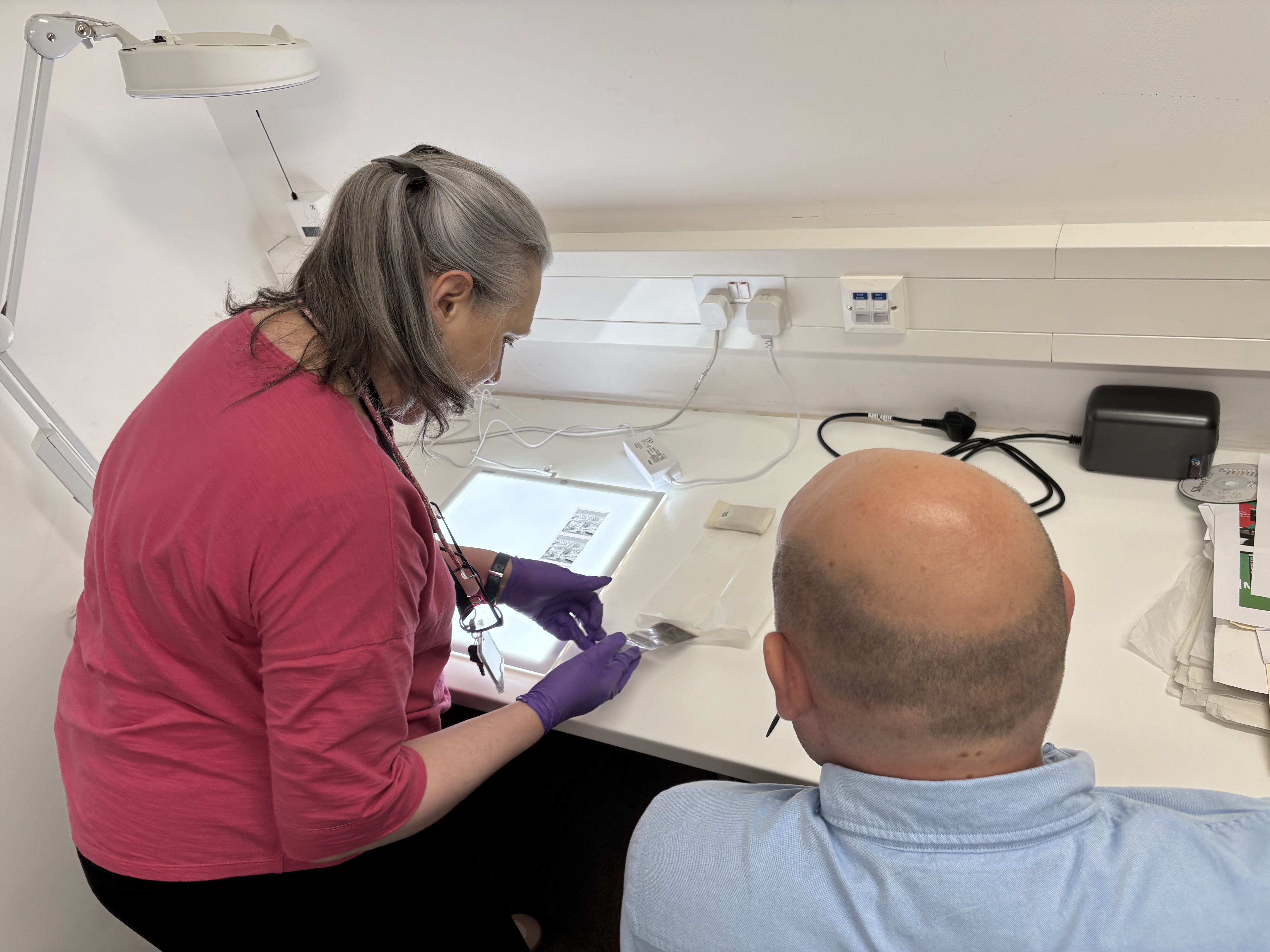
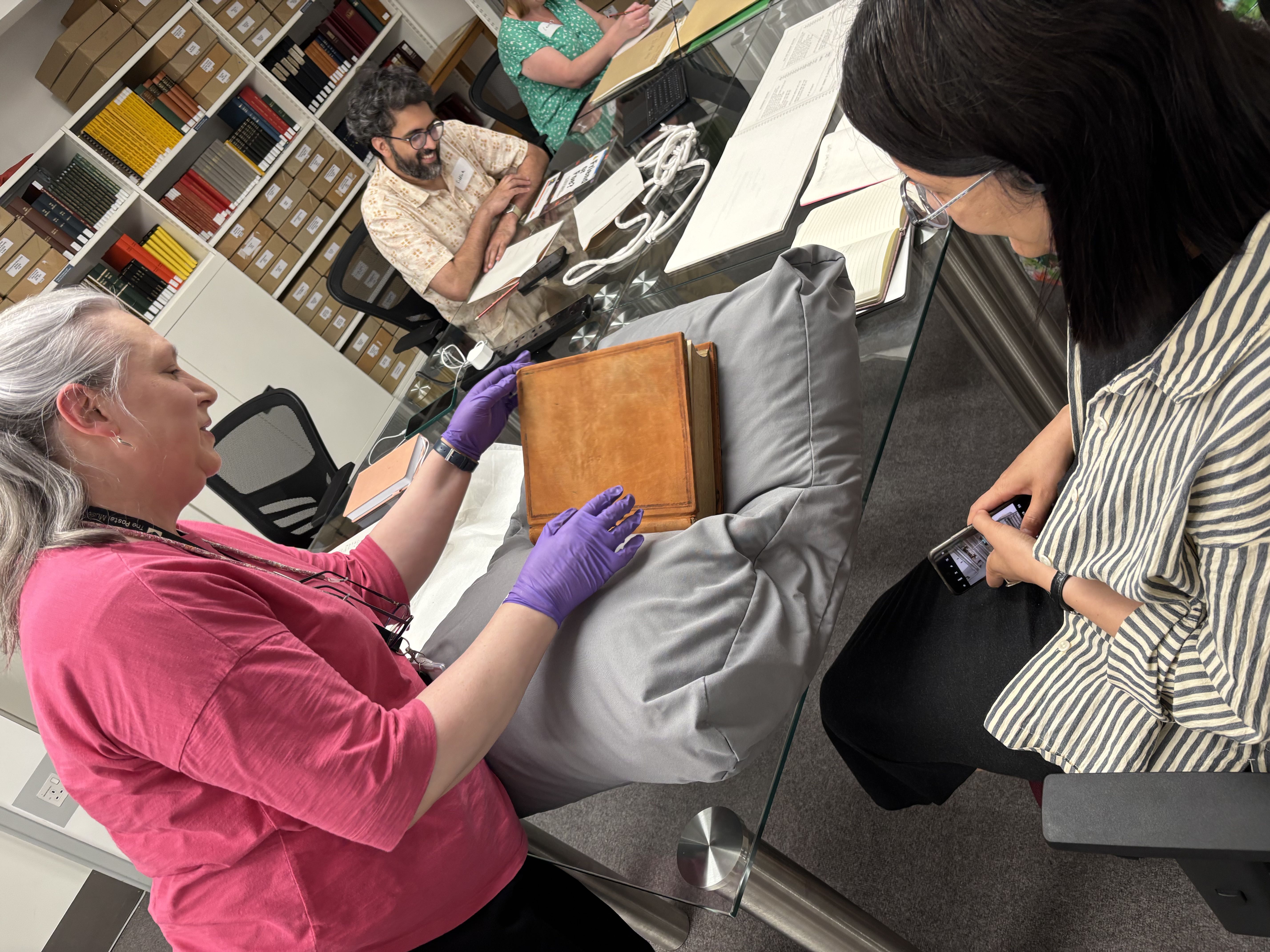
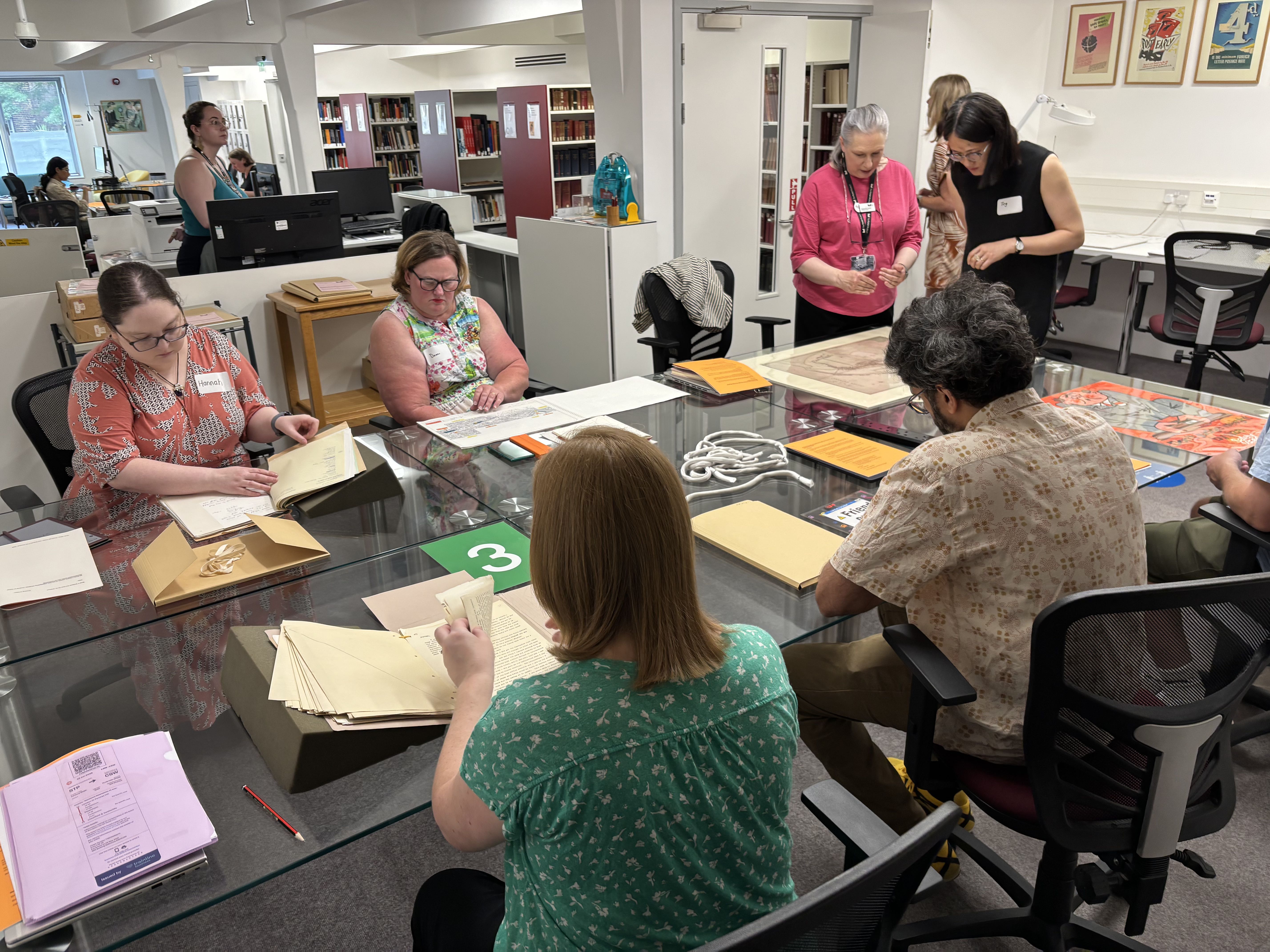
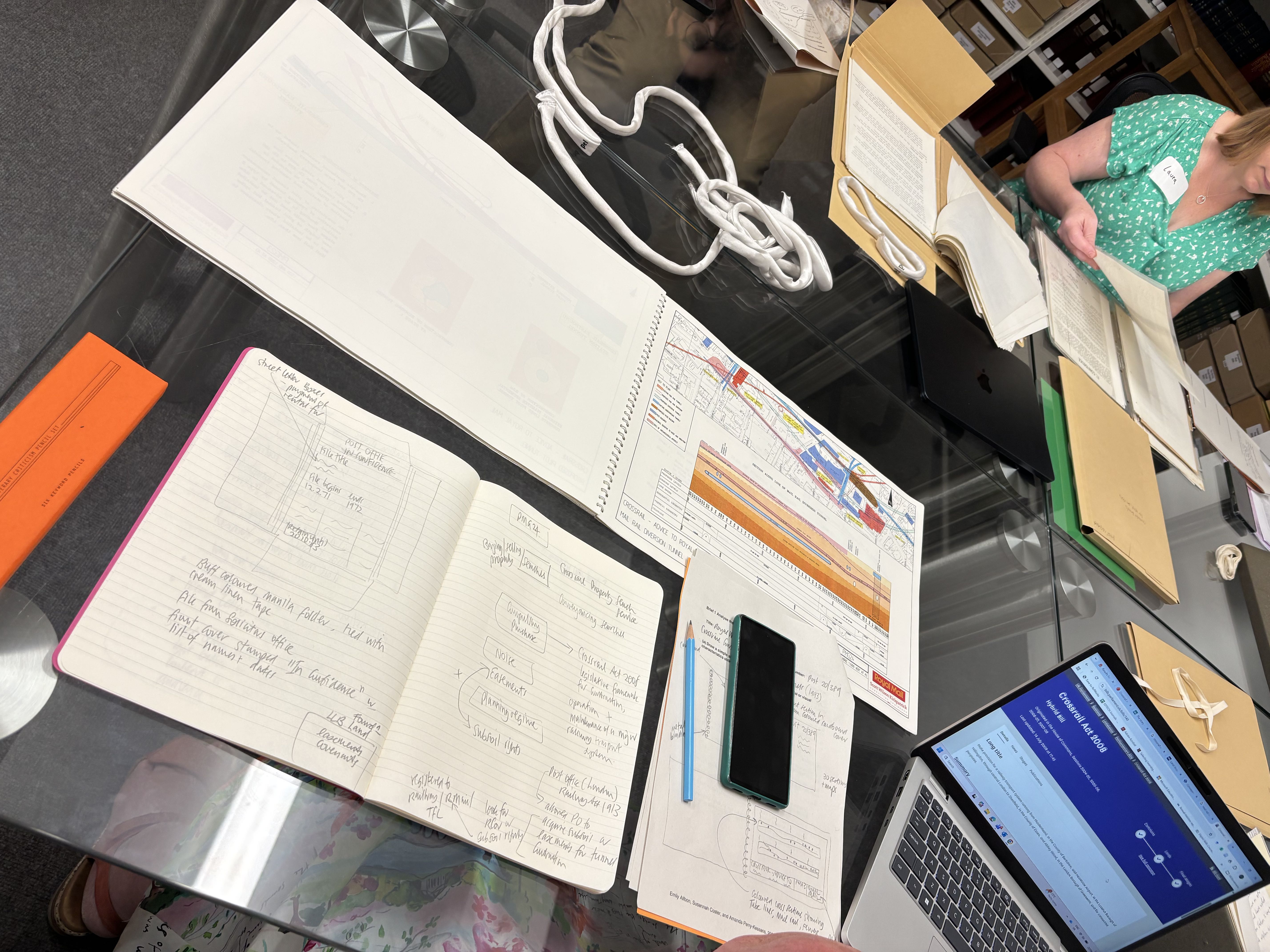
Interpreting shortlisted items from The Postal Museum Collections in the The Postal Museum Archive. Images (c) Amanda Perry-Kessaris 2026.
During the workshop we had the opportunity to explore Pigeon Post: The first airmail service!, an exhibition curated by Mathilde Jourdan, Archives Assistant at The Postal Museum, 2026.
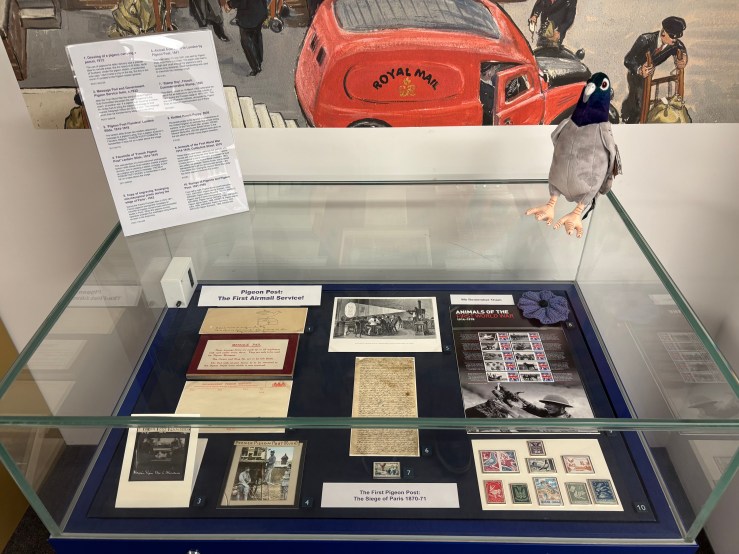
‘Pigeon Post: The first airmail service!’, an exhibition curated by Mathilde Jourdan, Archives Assistant at The Postal Museum, 2026. Image (c) Amanda Perry-Kessaris 2026.
Stage 3: Develop and disseminate Sparks
Objective: Complete and disseminate Sparks.
We have:
- Drafted a Spark Development Protocol (see Outputs), in late Summer 2026, to support our Collaborators towards developing Draft 1 of their Spark.
- Held two Reflections meetings, in Autumn 2026, at which we introduced the Spark Development Protocol and shared insights from the Workshop.
Our Phase A academic Collaborators (selected from via an open call issued in Summer 2025) are:
- Danon Pritchard
- Emma Jones
- Fred Motson
- Hamsa Jayanathan
- Hannah Philips
- Laura Charleton
- Shaun McVeigh
- Siddharth de Souza
- Ting Xu
Phase B: Catalyse impact
We expect to start Phase B in 2027.
We plan to begin by focusing on stakeholders in the secondary education sector. Subject to funding and research ethics approval, we will work in partnership with the The Charter School North Dulwich to co-design, test, and share practical experiences (Workshops) and accessible resources (Workbooks) to support law-curious secondary school students to:
- Develop their legal capability through engagements with The Postal Museum Collections; and
- Demonstrate that legal capability in the university admissions process, especially through their UCAS personal statements.
Our Phase B academic Collaborators will be:
- Laura Charleton, who has expertise in law school recruitment and admissions; and
- Rachel Warner, who has expertise in graphic design and workshop facilitation.
Outputs
Protocols
- Amanda Perry-Kessaris, Emily Allbon, and Susannah Coster (2026) Enlivening Legal Education through The Postal Museum: Spark development protocol v. 28.09.26.
- Amanda Perry-Kessaris, Emily Allbon, and Susannah Coster (2026) Enlivening Legal Education through The Postal Museum: Interpretation protocol v. 25.06.26
- Amanda Perry-Kessaris, Emily Allbon, and Susannah Coster (2025) Enlivening Legal Education through The Postal Museum: Initial Search Protocol v. 21.10.25
Explore further
To find out more about:
- Items held in the Collections, how they can be accessed, and how the expert collections staff can help you, visit The Postal Museum Collections website.
- Social engagement and impact work at The Postal Museum see Voices of Resistance: Slavery and Post in the Caribbean, which was nominated for a Museums Association Museums Change Lives Award.
- How legal researchers have, with the support of archivist Susannah Coster, used the Collections in the past, see the Fantasy Legal Exhibitions project led by Amanda Perry-Kessaris and Victoria Barnes in 2023.
- How designerly ways can enhance education, listen to this conversation about Design in Legal Education, a visually rich, experience-led book co-edited by Emily and Amanda in 2022.
Related projects:
- Fantasy Legal Exhibitions (since 2023)
- Lawbore – The best of the legal web, curated by academics for undergrads
- Legal Futures at The Horniman Museum (since 2026)
- Pop-up Museum of Legal Objects (2017)
- TL;DR – The less textual legal gallery
Ethics statement
This project is governed by the University of Kent Research Ethics Policies and Practice framework. It has been reviewed by the Kent Law School Research Ethics Advisory Group Staff Committee at the University of Kent and been given a favourable ethical opinion (Reference 963150).
Acknowledgements
We are grateful to:
- Susannah Coster, for her expertise, generosity, and leadership throughout this project;
- Our Collaborators, for their generosity, expertise, and permission to share their images and work;
- Mathilde Jourdan, for the technical support she gave, and intellectual contributions she made, to the Workshop; and
- Kent Law School and The City Law School for financial support.


[…] Enlivening Law through The Postal Museum (ongoing) […]
LikeLike
[…] Enlivening Law through The Postal Museum (2026) […]
LikeLike
[…] Enlivening legal education through The Postal Museum (academics, archivist, secondary school students and educators; capacity-building and process testing around how curated collections can be used to enhance university legal education, and the ability of secondary school students to develop and evidence their legal capability; at The Postal Museum, in a secondary school and on-line. […]
LikeLike